











IECD Egypt x Colas: empowering the next generation of professionals in the field of electrotechnics

In Egypt, the rate of unemployment for youth aged 15 to 29 stands at 14.9%, according to data published by the Central Agency for public mobilisation and statistics in 2024. Behind that number lies a wide gender gap: the rate goes down to 9.8% for young men versus 37.1% for young women.
In order to give Egyptian teens, be they boys or girls, better opportunities for fulfillment, IECD, a global organization dedicated to fostering the professional integration of youth worldwide, launched its flagship program, Energy, Industry and Construction Trades program, in Cairo and Alexandria over 10 years ago. This innovative initiative, supported by the Colas Foundation and Colas Rail, aims to provide Egyptian youth with both technical and soft skills training, giving them a strong foundation for building future-proof, sustainable careers.

A program tailored to Egyptian youth's specific professional integration needs
The Energy, Industry and Construction Trades training program is implemented across 5 schools: 3 schools in Alexandria and 2 in Cairo.
“Egyptian youth continue to face severe unemployment challenges in Egypt, primarily because of the mismatch between labor demand and supply. Young people struggle to find jobs with sustainable income and social protection,” says Yasmine Mandour, IECD Egypt’s project manager.
The situation is made all the more complex by the strong gender inequalities Egyptian women face. “Females face particular challenges entering male-dominated sectors such as technical and electrical fields, as employers continue to prefer hiring men. This is driven by cultural norms, work conditions, and social expectations,” she adds.

Bringing together hard and soft skills to provide a well-rounded education
The “Seeds of Hope/ the Technical education” program launched in Egypt in 2013, primarily to boost youth employability in the electrical maintenance sector. “It remains a very high-demand field, especially for multinational and large-sized companies focused on the electricity sector. But it is a key department in many non-electrical-based companies and other sectors as well,” Yasmine Mandour explains. “When it comes to industrial automation, on the other hand, it was identified as a niche specialization that matches an unmet need of the private sector.” The program is driven by a strategic partnership with the Egyptian Ministry of Education and Technical Education, as well as a pool of private sector partners, such as Colas Rail.
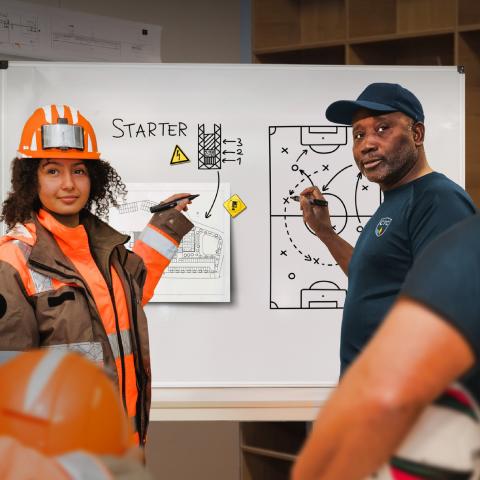
On top of being attentive to match local job market trends, the program’s distinguishing factor is its combination of soft skills and employability training with technical education for both students and staff in an objective to sustain quality learning.
For example, IECD is implementing its own gender initiative through a series of monthly sessions delivered to first-year students on age-appropriate gender equality topics. In order to ensure these values are shared throughout the students’ academic careers, the teaching staff and management also benefit from Training-of-Trainers on gender egalitarian approaches.

In Alexandria and Cairo, students and faculty transformation is well underway
Dr. Mina Nazih, the headmaster of the Don Bosco Technical Institute in Egypt in Alexandria, has seen just how much the program has helped his students and colleagues.
“They are passionate to learn and to develop technical competence,” he says. But he’s also noticed how much students have gained in learning how to account for soft skills in their approach to work: time management, problem solving, communication skills, feedback exchange. Out of the students who participated in IECD activities this year, he was proud to point out that 10 had already received scholarships to complete their studies at a higher technical institute in Italy starting in February.
Omar, a 17 year-old student from the region of Alexandria, was very grateful to participate in the IECD program.
“I became more confident at organizing my time and I'm also more confident when I speak. My family actually noticed that I became calmer and more responsible. It's improved the way I interact with others,” he says.
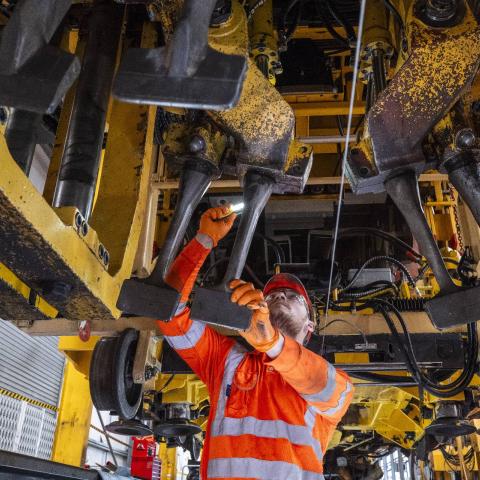
Through the partnership with the Colas Foundation, students from the Electro Misr Applied also interned at Colas Rail for the first time. “There was a very strong emphasis on occupational safety and health,” Yasmine Mandour explains. “The students valued the fact that there was rotation across different metro stations so they could learn from different technical engineers. This ensured that their experience, expertise, and knowledge were diversified and comprehensive.”

A program with proven impact that still has room to grow
In 2025, 587 students in Egypt received training through the Energy, Industry and Construction Trades program. In addition to that, IECD opened and accredited the industrial automation department in its applied technology school and center, celebrating its first cohort of graduates. Fourteen teachers also took part in project-based learning training and coaching to enhance their pedagogical skills, while 7 electricity teachers took part in technical training.
“The main goal of the program so far has been to boost employability pathways for young people in the electricity sector. In Alexandria, according to the latest tracer study we conducted for the past two academic years, 59% of students were able to find job opportunities right after graduation, including 20% of females. In Cairo, the percentage increases to 83%, including 35% who are employed in opportunities closely related to their fields,” Yasmine Mandour reports.
Through these studies, IECD also found that 71% of surveyed students believe that the training provided on life skills and gender awareness has positively impacted their personal and professional lives.
For 2026, the goal is to keep developing the internships and growing IECD’s pool of corporate partnerships. “We try to participate in different networking events and programs and invest in capacity-building programs for the team to consolidate the partnerships and our technical expertise in order to stay up to date on the new market trends and skills in need,” Yasmine Mandour explains.
In practice, the organization hopes this will translate to enhancing personal and employability skills for up to 1,000 students, including 200 young women, and training up to 75 teachers.
Through this multi-pronged approach, IECD expects to keep positively improving employability on a human level, helping students and teachers grow as individuals, but also on a systemic level, through their influence on the educational offer for youth pursuing technical studies and their ability to bring schools and companies in search of new talent closer together.