











Cycling plans, road requalification, pedestrianization of city centers… Active mobility is now a major priority for local authorities. Beyond intentions, implementation raises very practical questions: route continuity, user safety, environmental integration, and long-term cost control. In this context, Colas supports public and private project owners in designing, building, and maintaining infrastructure tailored to real uses and on-the-ground constraints.
Active mobility: a strategic priority for local authorities
For local authorities, developing active mobility is no longer just about building a cycle path or widening a sidewalk. It involves:
- delivering continuous, comfortable, and easy-to-read cycling infrastructure,
- improving safety for vulnerable users (pedestrians, cyclists, people with reduced mobility) in conflict areas,
- integrating water management (permeable pavements, infiltration), reducing urban heat islands, and limiting carbon footprint,
- controlling total cost of ownership by anticipating maintenance and lifecycle needs.

Cycling networks, greenways, and road requalification programs are part of long-term strategies, where sustainable mobility becomes a lever for urban development.
Colas solutions for active mobility: a complete value chain, from design to maintenance
In a context where environmental and mobility challenges are widely shared, Colas brings added value through:
- an integrated project approach,
- proven technical solutions,
- practical, experience-based insights to support decision-making.
Pavements tailored to pedestrian and cycling uses
Depending on the context (urban cycle lanes, leisure greenways, pedestrian paths, shared spaces), Colas offers a wide range of solutions:
- Colored pavements to improve readability of cycling facilities and secure sensitive areas.
- Permeable pavements to reduce soil sealing, promote rainwater infiltration, and mitigate urban heat islands.
- Bio-based asphalt solutions combining riding comfort, lighter tones, and reduced carbon footprint.
These solutions help build credible technical alternatives in public tenders and support sustainable mobility objectives.

Traffic management and signage: improving safety for vulnerable users
Safety often depends on friction points: intersections, crossings, cycle path exits, and school areas. Leveraging Aximum’s expertise, Colas provides:
- traffic lights and systems adapted to pedestrian and cycling flows,
- road markings and route guidance,
- smart traffic management solutions.
Objective: improve traffic flow, reduce accidents, and make journeys more intuitive for all users.
Maintenance and service level of infrastructure
A heavily used cycle path or greenway deteriorates faster than a secondary road. Colas supports project owners with:
- long-term maintenance contracts,
- rapid interventions on surface defects,
- a service-level approach focused on performance over time.
Active mobility: flagship projects to support informed decision-making

Among Colas’ landmark projects:
- Voies Lyonnaises (Lyon Metropolitan Area)
- La Doua Campus (Lyon)
- Pierrefonds – Palesne greenway (France)
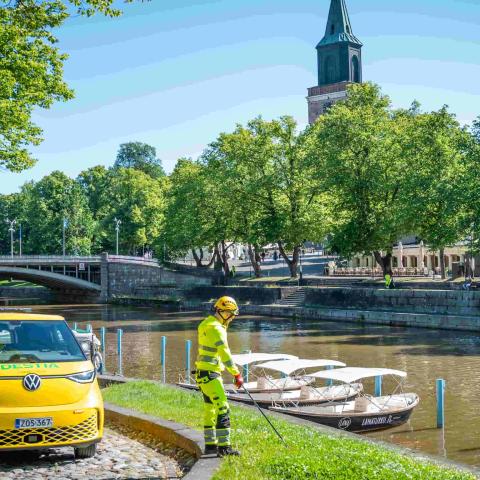
- Urban maintenance contracts (Turku, Finland)
These projects demonstrate Colas’ ability to deliver reliable, scalable and context-adapted solutions.
Conclusion: co-building sustainable active mobility networks
The success of a project depends on long-term performance: design quality, material choices, maintenance strategy, and guaranteed service level.
By combining expertise in roads, materials, traffic management, and maintenance, Colas supports stakeholders in deploying safe, comfortable and sustainable active mobility networks.

Planning a cycling, greenway, or road redevelopment project? Our teams are ready to support you.