








Diversification Activities Supporting Sustainable Territorial Development

Alongside our core businesses – roads, rail and materials – we are developing complementary activities to address the environmental, climate and social challenges facing territories. By applying our construction and civil engineering expertise to related fields, we provide additional and sustainable solutions to meet territorial needs.
These activities help limit land take and soil sealing, optimize the use of resources, strengthen infrastructure resilience, and sustainably improve the quality of life.
Restoring Natural Environments through Ecological Engineering
Ecological engineering relies on a range of techniques designed to “repair” degraded ecosystems and reduce the natural risks to which territories are exposed (flooding, biodiversity loss, erosion, landslides, etc.).
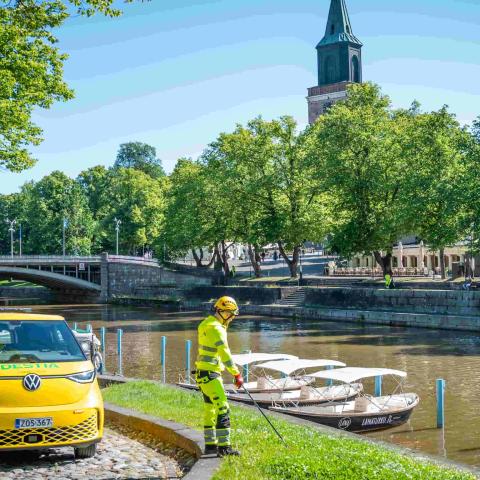
Colas’ activities include restoring natural or artificial environments degraded by human activity, strengthening riverbanks and waterways using nature-based solutions, developing measures to combat flooding, runoff and erosion, as well as creating green and blue corridors—terrestrial or aquatic natural areas that enable species movement and help preserve biodiversity.
By restoring ecosystems to their natural functions, these solutions contribute to safer, more vibrant territories that are better accepted by local communities and users.

Landscape Development at the Heart of Cities
Landscape development is now a key driver of sustainable urban development. At Colas, we design spaces that combine living elements (fauna, flora, extensive or intensive vegetation), natural components (topography, water bodies, wetlands, permeable soils) and urban amenities (street furniture, lighting, benches, fountains, soft mobility pathways, rest areas) in order to preserve water resources, limit soil sealing, reduce urban heat islands and enhance the attractiveness of public spaces.
These projects bring together quality of life, environmental performance and climate adaptation.

Pollution Clean-Up, Recycling and Reuse of Materials
We work on polluted soils and water, while recycling and reusing materials from construction sites. These approaches help reduce waste volumes, limit the extraction of natural resources and decrease material transportation, placing projects within a circular economy framework.
They also make it possible to rehabilitate industrial brownfields and restore their potential for use—logistics, housing, economic activities or public spaces—while limiting urban sprawl onto agricultural or natural land.

Water-Related Activities: Essential to Territorial Resilience
As a key resource, water lies at the heart of territorial functioning. Colas operates throughout the water cycle (networks, sanitation, stormwater management and hydraulic structures). These projects contribute to a more responsible and resilient management of water resources by limiting runoff and flooding, improving the quality of discharges into the natural environment, and helping territories adapt to climate change and extreme weather events.

Adapting Infrastructure to Climate Change
In response to the increasing intensity of climate events, Colas designs and delivers resilient infrastructure to protect territories. We integrate adaptation from the very early stages of project design: permeable soils, water management, greening solutions and reduction of heat islands.
Following natural disasters, we also help restore services and secure critical infrastructure.

A Comprehensive Approach to Projects for Territories
Our diversification activities, alongside our historical expertise, enable us to design each project with a focus on creating local, sustainable and responsible value. They provide long-lasting, comprehensive solutions to meet the growing infrastructure needs of territories, while adapting to their specific realities. By mobilizing ecological engineering, landscape development, waste management, water-related expertise and climate adaptation solutions, we help support territories that are more sustainable, more resilient and aligned with evolving uses.