










Ecological Engineering: Building With Nature

Ecological engineering refers to all planning and development techniques that rely on natural processes to preserve, restore or enhance ecosystems.
Unlike purely technical approaches, it prioritizes nature-based solutions inspired by living systems: vegetation, soils, water, natural cycles and ecological connectivity.
This approach makes it possible to reconcile territorial development, biodiversity protection and climate change adaptation.
Colas’ Expertise in Ecological Engineering
Colas develops nature-based solutions across a wide range of development and infrastructure projects.
These actions reflect the Group’s evolution toward a more integrated vision, combining infrastructure performance with ecosystem restoration and ecological resilience.
Examples of Ecological Engineering Applications
Ecological engineering covers a wide range of solutions tailored to territorial challenges.
Creating Urban Cooling Islands
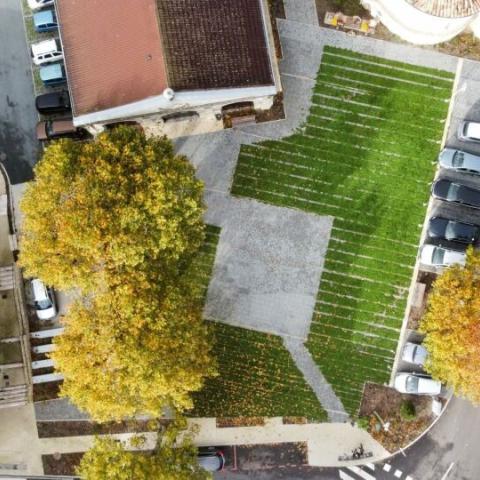
The integration of vegetation, permeable soils and natural shading significantly reduces urban temperatures.
These developments improve user comfort and mitigate urban heat island effects.
Riverbank Stabilization Using Bioengineering
Vegetation-based engineering techniques make it possible to:
- stabilize riverbanks and shorelines,
- limit erosion,
- promote biodiversity,
- enhance landscape integration.
This approach avoids the systematic use of concrete structures.
Developing Ecological Corridors
Green and blue corridors enable species movement and the maintenance of viable populations.
They support habitat preservation and strengthen ecological resilience.
FAQ
Frequently Asked Questions About Ecological EngineeringIt prioritizes solutions based on natural cycles rather than artificial structures.
- climate change adaptation,
- reduced maintenance costs,
- improved living environments,
- biodiversity restoration,
- better landscape integration.
Yes. It is essential for renaturing cities through vegetation, soil de-sealing, water management, living soils and micro-habitats.
Yes. It can complement or replace certain technical systems, such as vegetated slopes, filtering ditches, infiltration zones, landscaped developments and ecological networks.
Yes. With expertise in ecological development, hydrology, landscaping and permeable materials, Colas delivers diverse projects including riverbanks, waterways, wetlands and urban parks.